
Cryogenic Tank MLI Repair Series: Build the Material Kit Before the Vacuum Work Starts
Most cryogenic tank teams do not need a lecture on MLI. They already know the job: keep radiation down, protect the vacuum space, avoid cold bridges, and get the vessel back into service without surprises.
The harder problem is usually less glamorous. When a tank is opened for repair, or when a new vessel is moving from drawing to production, the insulation work depends on a pile of small decisions: foil width, spacer choice, tape type, adsorbent package, vent path, nozzle patches, batch labels, and how long the material sits in air before closure.
This series looks at those details by tank type. We start with the material kit because it is the part a supplier can actually help improve without asking the customer to throw away a proven design.
Why The Kit Matters
A vacuum-insulated cryogenic tank is not just a vessel with insulation inside it. EIGA Doc 224 describes static vacuum insulated cryogenic vessels as systems with an inner pressure vessel, insulation, outer jacket, auxiliary equipment, and an annular space under vacuum. The same document notes that static vessels can be used for liquid oxygen, nitrogen, argon, and helium, with the same principles also applicable to other cryogenic gases such as carbon dioxide and flammable gases when the right rules are followed.
That broad scope is exactly why a one-material answer is weak. LNG tanks, LOX tanks, liquid hydrogen tanks, ISO tanks, road tankers, cryostats, and vacuum-jacketed piping do not fail in the same way. They also do not use MLI in the same way.
For East Far Cryo, the useful offer is a controlled material package:
- MLI rolls, slit rolls, or drawing-cut layers;
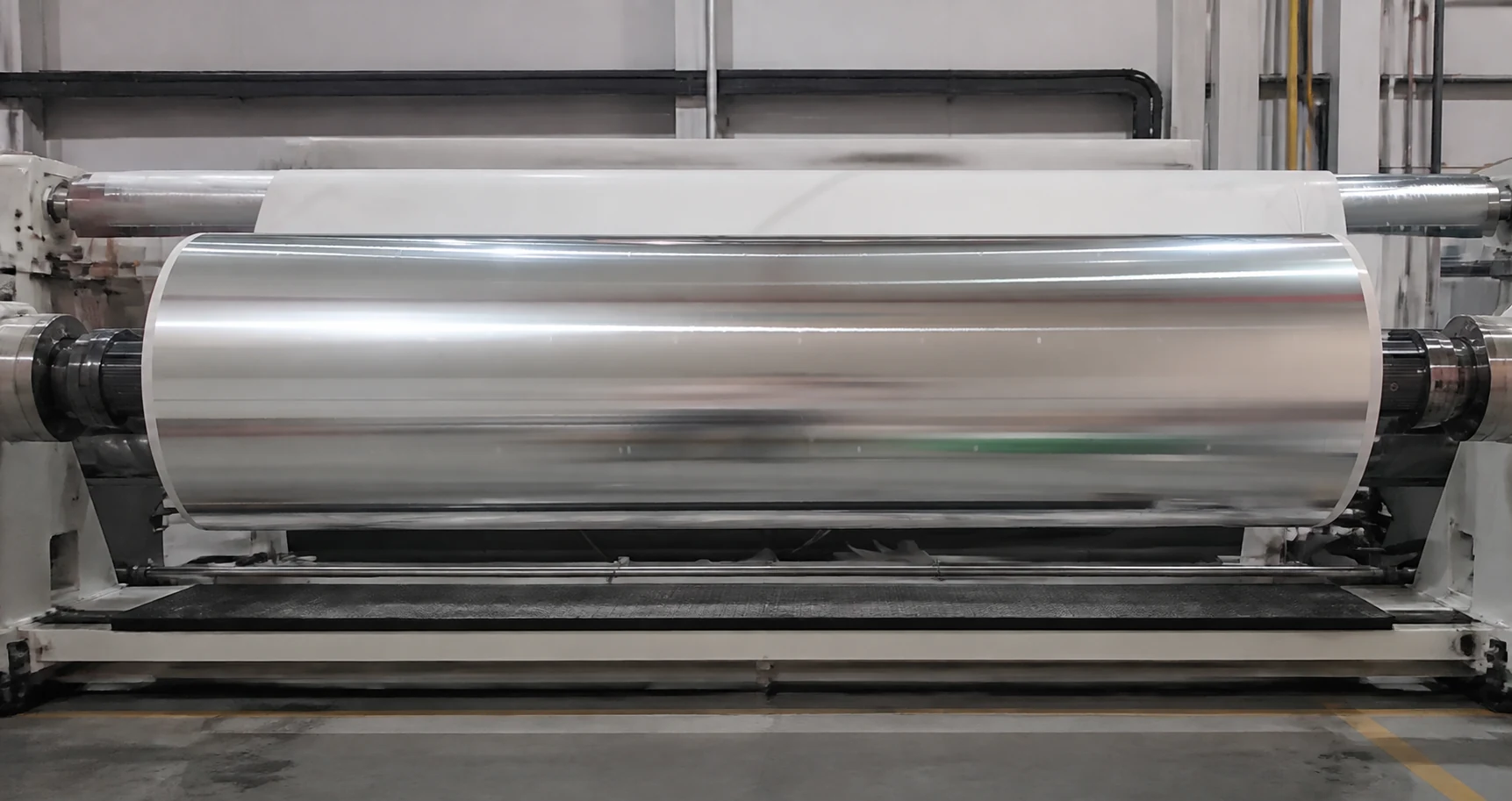
- aluminum foil and fiberglass paper composite materials for mature LNG-style structures;
- CryoMLI series materials for different vacuum, temperature, handling, and layer-density needs;
- CryoTape for edges, overlaps, local holding, and repair zones;
- adsorbents, molecular sieves, or getter support materials for vacuum maintenance;
- labels, bagging, batch records, and repair-location packaging.
It sounds ordinary. Good. Ordinary is what you want during a maintenance window.
The Numbers That Shape This Series
The first number comes from EIGA Doc 224. For static vacuum insulated cryogenic vessels, the document gives typical maintained vacuum levels of less than 0.05 mbara for multilayer insulation and 0.2 mbara for perlite insulation in the interspace. That does not mean every tank should be judged by one generic value, but it does show how strongly the insulation choice and vacuum condition are tied together.
The second number comes from NASA work on cryogenic vacuum insulation for vessels and piping. That paper states that vacuum cryogenic insulation systems can reach very low heat transfer when material selection and execution are right. It also gives a blunt warning: compression, seams, penetrations, and edge effects can increase MLI heat leak by 100% or more if the system is poorly designed.
That is a repair lesson, not just a laboratory note. Many old-tank problems sit around nozzles, supports, access openings, local patches, saddles, transport damage, or places where layers were pressed together. A perfect roll specification cannot fix a bad edge.
The third number is about layer density. NASA testing on low-layer-density MLI found an optimum range between 1.5 and 2.6 layers/mm under roughly 77 K to 293 K boundary conditions, with high-vacuum test data below 5.0E-6 Torr. This should not be copied blindly into every industrial tank. It does, however, remind us that “more layers” and “tighter wrapping” are not the same as better insulation.
CERN cryostat training adds another caution. In LHC cryostat insulation vacuum sectors, large areas of MLI were identified as a major outgassing source; one example discusses about 53,000 m² of MLI in a sector and about 200 hours of pumping after air exposure. The lesson is simple: in large vacuum systems, polymers, tapes, spacers, and MLI exposure time are part of the vacuum plan.
What Goes Into A Practical Material Kit
The kit should match the equipment, not the catalog page.
For LNG and many mature transport or storage tanks, customers may already use aluminum foil with fiberglass paper. In that case, the repair package should protect the original wrapping logic. The supplier’s job is to prepare matching foil, glass-fiber paper, slit widths, shaped patches, edge pieces, and clean packaging so the shop does not improvise when the vacuum jacket is open.
For liquid nitrogen, oxygen, and argon tanks, cleanliness and compatibility move higher on the list, especially for oxygen service. The kit needs approved handling, clean packaging, and materials that fit the owner’s procedure. Tape and adsorbent choices should be reviewed with the same care as the reflective layers.
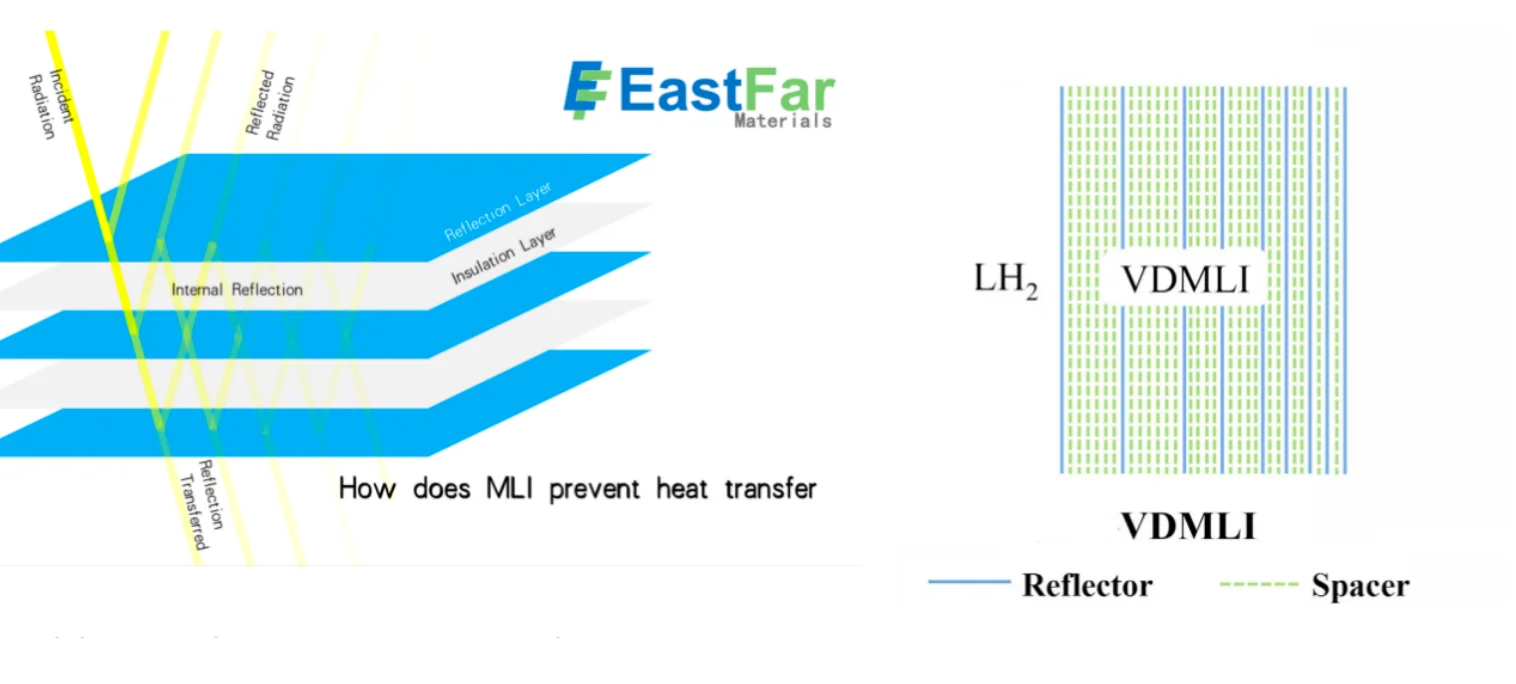
For liquid hydrogen tanks, layer density, spacer contact, cold-side conduction, venting, and low-temperature behavior need more attention. A CryoMLI series package may combine different reflector and spacer choices across the blanket instead of repeating one construction everywhere.
For ISO tanks and road tankers, transport vibration and local mechanical damage matter. Repair kits should include narrow rolls, pre-cut nozzle and support pieces, local reinforcement, and tapes that are easy to control in the field.
For cryostats and superconducting equipment, low outgassing can be more important than adding layer count. The package should treat MLI, tape, labels, threads, spacer, and adsorbent as one vacuum-facing material set.
A Simple Checklist Before Release
Before a repair kit or new-build kit leaves the factory, these questions are worth answering in writing:
| Question | Why it matters |
|---|---|
| What cryogen and temperature boundary is this for? | LNG, LOX, LN2, LAr, LH2, LHe, and cryostat service do not share one insulation answer. |
| What vacuum level and pump-down method are expected? | MLI performance is vacuum-sensitive, and adsorbents cannot compensate for every leak or wet system. |
| Is the existing tank using foil plus fiberglass paper? | Mature LNG customers often need matched repair material, not a new stack. |
| Which areas will be opened or repaired? | Nozzles, supports, manways, heads, saddles, and vacuum ports need different pre-cut parts. |
| What tape is allowed? | Tape can hold layers neatly, but large or poorly placed tape areas can create heat paths or outgassing load. |
| What adsorbent or molecular-sieve package is required? | Type, activation, amount, containment, and placement should follow the tank procedure. |
| How will the material be packed and labeled? | Clean bags, batch numbers, layer IDs, and repair-zone labels reduce shop-floor mistakes. |
This checklist is not paperwork for its own sake. It is how a material kit becomes repeatable.
The 7-Part Update Plan
We will update this series every three days.
| Date | Article |
|---|---|
| 2026-08-05 | Part 1: Build the material kit before the vacuum work starts |
| 2026-08-08 | Part 2: LNG aging tanks using aluminum foil and fiberglass paper |
| 2026-08-11 | Part 3: LN2, LOX, and LAr static tanks: clean repair and vacuum recovery |
| 2026-08-14 | Part 4: Liquid hydrogen tanks: CryoMLI layer density and venting |
| 2026-08-17 | Part 5: ISO tanks and cryogenic road tankers after transport vibration |
| 2026-08-20 | Part 6: Cryostats and superconducting equipment: low outgassing materials |
| 2026-08-23 | Part 7: New-build tank kits from drawings, not loose rolls |
Source Notes
The data in this article is used as engineering context, not as a substitute for the tank designer’s calculation, pressure-vessel rules, leak-test plan, oxygen-cleaning procedure, or site safety review.
- EIGA, Doc 224/20, Static Vacuum Insulated Cryogenic Vessels - Operation and Inspection
- NASA, Cryogenic Vacuum Insulation for Vessels and Piping
- NASA, Thermal Analysis of Low Layer Density Multilayer Insulation Test Results
- CERN, Vacuum for Thermal Insulation of Cryogenic Equipment
Talk To East Far Cryo
Send the tank type, cryogen, current MLI structure, vacuum history, repair area, adsorbent practice, and drawings if available. East Far Cryo can prepare MLI materials, CryoTape, adsorbents, molecular sieves, pre-cut parts, and labeled material kits for repair or new-build review.