
CryoMLI
CryoFilm Al-PET / Al-PI
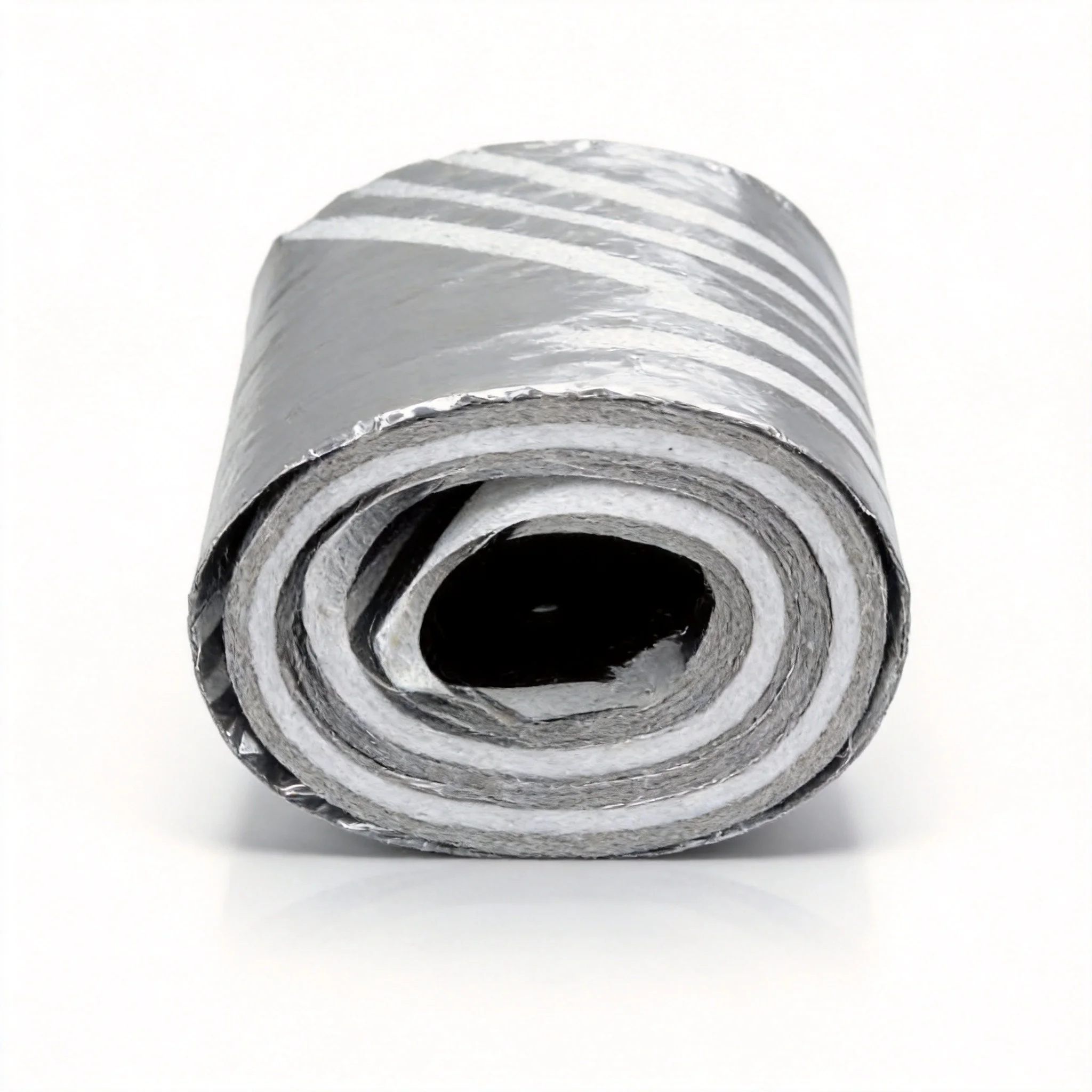
Reflective film material for cryogenic MLI layers, venting layers, spacecraft-style thermal blankets, and drawing-based insulation kits.
Typical applicationsCryogenic storage / Liquid hydrogen / 4K magnets / Vacuum piping / +4 more
Engineering datasheet
Selection data and declared limitations
Technical sales will review the requested product and application conditions, then reply by email with document availability and next steps.
- Structure
- Aluminized PET or PI film, single-side or double-side, plain or perforated
- Temperature range
- substrate and application specific
- Base film thickness
- 0.0065 mm
- Common PET thickness
- 0.012 mm
- Heavy handling layer
- 0.025 mm
- Recommended vacuum condition
- For a qualified evacuated insulation space. Final pressure, pump-down method, residual-gas load, hold time, and vacuum-maintenance strategy must be defined for the installed assembly; performance degrades as gas conduction increases.
- Thermal performance
- Apparent thermal conductivity and heat flux are installed-system values, not unconditional roll-material properties. No single value is published here. Request data for stated hot / cold boundary temperatures, vacuum level, layer density, seam design, and test method.
- Width and roll options
- Master-roll availability plus custom slitting and rewinding are confirmed by RFQ. Specify finished width, width tolerance, roll length, core, winding direction, and packaging limits.
- Layer configuration options
- Supplied as roll film, slit widths, perforated film, or profile-cut layers. PET or PI substrate, base-film thickness, metallized side, perforation pattern, and layer position are selected from the drawing and service environment.
- Processing options
- Slitting and rewinding to confirmed dimensions
- Sewing and blanket assembly where the structure permits
- Drawing-based or sample-based cutting
- CNC vibration-knife profile cutting, openings, and project kit packaging
- Typical applications
- Notes and limitations
- Not a structural support, pressure boundary, seal, or substitute for vacuum-system design.
- Published temperature ranges describe constituent material capability; adhesive, seam, contamination, oxygen-service, and installation limits can narrow the usable range.
- System heat leak must be validated for the actual assembly and test conditions.
- A reflective film layer is not a finished MLI blanket by itself; spacer material, layer density, edge treatment, venting, and installation method remain part of the design.
- Single-side aluminized film requires orientation control during cutting and installation.
- Space, oxygen, hydrogen, ESD, and low-outgassing acceptance require project-specific documentation and customer validation.
- Download PDF
Product technical table
CryoFilm Al-PET / Al-PI technical data
The table below is published as product-level reference data. Final use still depends on application geometry, vacuum condition, installation density, cleanliness, and customer validation.
| Item | Unit | Technical specification |
|---|---|---|
| Product form | - | Aluminized PET film / aluminized PI film; roll, slit roll, perforated roll, or profile-cut parts |
| Base film material | - | PET or PI, selected by temperature, handling, outgassing, and project specification |
| Base film thickness range | μm | 6.5 / 12 / 25 typical; other thicknesses by RFQ |
| Approx. imperial base thickness | mil | 0.26 / 0.47 / 0.98 |
| Metallizing format | - | Single-side aluminized or double-side aluminized |
| Nominal aluminum coating | Å | 600 per aluminized side unless otherwise specified |
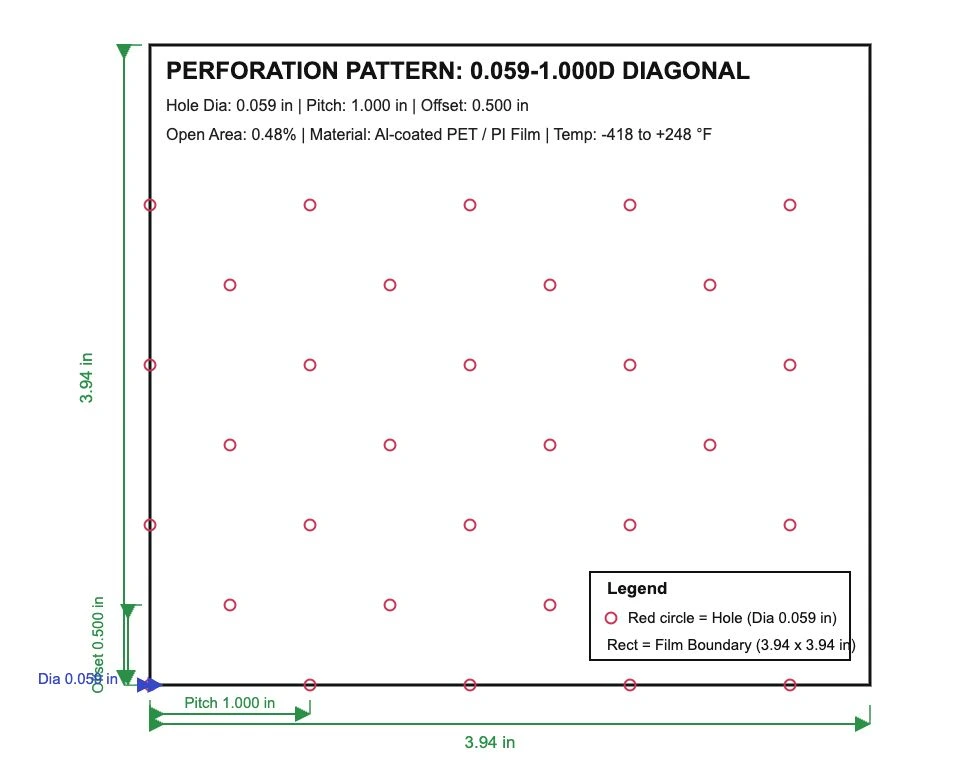
| Perforation option | - | Plain film or controlled perforation pattern for pump-down and venting |
| Example perforation | - | 0.059 in hole diameter / 1.000 in pitch / 0.500 in offset / 0.48% nominal open area |
| Typical MLI layer role | - | Reflective shield layer, selected venting layer, cold-side low-conduction layer, or warm-side handling layer |
| Processing | - | Slitting, rewinding, perforation review, drawing-based cutting, labeling, and kit packaging |
| Use limits | - | Final limits depend on substrate, coating side, spacer contact, adhesive/tape system, cleanliness, vacuum, and customer validation |